
Odour Surveys & Qualitative Odour Assessments
OdourScope provides professional odour surveys and qualitative odour assessments for planning applications, environmental investigations and development feasibility across the UK.
Our site-based assessments consider odour character, intensity, frequency and duration, source activity, meteorological conditions and the relationship between potential odour sources and nearby sensitive receptors.
Survey findings are considered alongside site conditions, surrounding land uses, operational information and planning context to provide a proportionate and technically robust assessment of potential odour effects.
What is an Odour Survey?
An odour survey is a structured site-based assessment used to characterise existing odour conditions and understand how odour may affect nearby sensitive receptors.
The survey may include observations at potential source locations, along likely dispersion pathways and at representative receptor positions. The purpose is not simply to determine whether an odour is present, but to understand its character, intensity, frequency, duration and potential significance in the context of the surrounding environment.
Professional odour surveys are commonly used to support planning applications, feasibility assessments and investigations where odour may represent a material environmental consideration.
When is an Odour Survey Required?
An odour survey may be required where there is uncertainty over existing odour conditions, where a development is proposed close to an existing odour source, or where new or intensified activities may introduce odour effects at nearby receptors.
Typical situations include residential development near agricultural or industrial uses, development close to wastewater or sewage treatment infrastructure, proposals involving waste or food-processing activities, commercial kitchen extraction, and other sites where odour may influence planning acceptability.
A survey can also be useful at an early feasibility stage to identify potential constraints before a planning application is submitted.
Our Qualitative Odour Assessment Approach
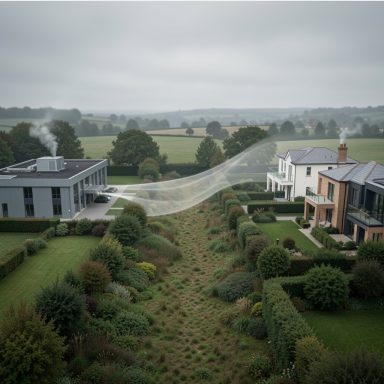
Our qualitative assessments are based on a source–pathway–receptor approach. This considers the nature and strength of the potential odour source, the way odour may travel through the environment, and the sensitivity of the receptors that may be affected.
The assessment may consider site observations; odour character and intensity; frequency and duration of observed odour; source activity and operating conditions; meteorological conditions; separation distance and local surroundings; receptor sensitivity; planning and land-use context; and relevant operational or historical information.
No single observation is considered in isolation. Findings are interpreted in the context of the wider evidence available for the site.

What We Assess During a Site Survey
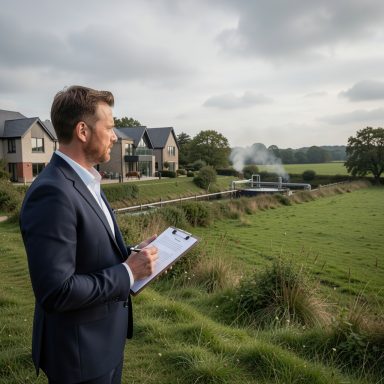
During an odour survey, observations are undertaken at locations selected to represent the relationship between potential odour sources and nearby receptors.
Depending on the project, the assessment may consider:
- the character and offensiveness of the odour;
- the intensity of odour at the observation location;
- the frequency with which odour is detected;
- the duration of individual odour episodes;
- source activity at the time of observation;
- wind direction and meteorological conditions;
- topography and physical barriers;
- the proximity and sensitivity of nearby receptors.
These factors help establish whether odour effects are likely to be transient and minor or whether they may represent a material constraint requiring further assessment or mitigation..
Types of Odour Sources We Survey
OdourScope undertakes qualitative odour surveys across a wide range of sectors and development types.
This includes:
- Agricultural and farm sources, including livestock operations, manure storage, slurry, equestrian uses and related rural activities.
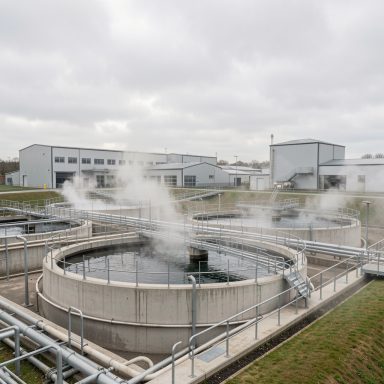
- Wastewater and sewage sources, including treatment works, pumping infrastructure and associated processes.
- Waste and industrial activities, including storage, handling, processing and manufacturing uses.
- Food production and commercial premises, including restaurants, takeaways and commercial kitchen extraction.
- Sensitive development near existing odour sources, including residential and mixed-use development proposed close to agricultural, industrial, wastewater or commercial activities.
The methodology is tailored to the nature of the source and the level of potential risk.
Survey Findings & Reporting
The findings from an odour survey are considered alongside available site information, mapping, operational data, planning history, meteorological conditions and surrounding receptor locations.
Where the survey forms part of a planning submission, the results are presented in a clear, planning-ready report setting out the methodology, observations, interpretation and conclusions.
The report may identify potential constraints, the likely significance of odour effects and any mitigation measures considered appropriate to reduce exposure at sensitive receptors.
Where further assessment is required, this will be identified clearly.

When is Dispersion Modelling Needed?
A qualitative odour survey is not always sufficient on its own.
For more complex developments, higher-risk sources or sites where detailed prediction of odour exposure is required, quantitative assessment techniques such as dispersion modelling may be appropriate.
Dispersion modelling can be used to estimate how odour concentrations vary over distance and time, taking account of source characteristics, meteorological conditions, terrain and building effects.
The need for modelling depends on the nature of the source, the available evidence, receptor sensitivity and the requirements of the relevant planning authority or regulator.
Related Odour Assessment Services
Odour surveys often form part of a wider odour assessment strategy.
OdourScope also provides:
- Odour Impact Assessments for Planning
- Agricultural & Farm Odour Assessments
- Commercial Kitchen Odour Assessments
- Odour Consultancy and Feasibility Advice
These services can be combined where a project requires both site-based survey work and a formal planning assessment.
Why Choose Odourscope
OdourScope provides specialist odour consultancy with a focus on proportionate, technically defensible assessment.
Our approach combines site-based evidence, professional judgement and current UK guidance to provide clear conclusions suitable for planning and environmental review.
We support residential, commercial, agricultural, industrial and mixed-use developments across the UK, from early feasibility through to formal planning submission.
Request a Quote
If your project requires an odour survey, qualitative odour assessment or wider Odour Impact Assessment, please contact us with the site location, proposed development and any available planning or operational information.
We can advise on the most appropriate level of assessment and provide a clear scope and quotation.