
Agricultural & Farm Odour Assessments
OdourScope provides specialist agricultural and farm odour assessments for planning applications, development feasibility and environmental review across the UK. We assess potential odour effects associated with livestock, manure and slurry storage, equestrian activities and other rural operations, as well as sensitive development proposed near existing agricultural odour sources.
Our assessments combine site-based odour surveys, source–pathway–receptor analysis, meteorological conditions, receptor sensitivity and operational information to provide a proportionate and planning-ready evaluation of potential odour impacts.
What is an Agricultural Odour Assessment?
An agricultural odour assessment evaluates the potential for odour from farming and rural activities to affect nearby sensitive receptors, or the suitability of new sensitive development proposed close to an existing agricultural source.
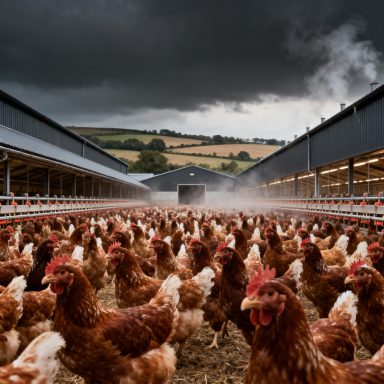
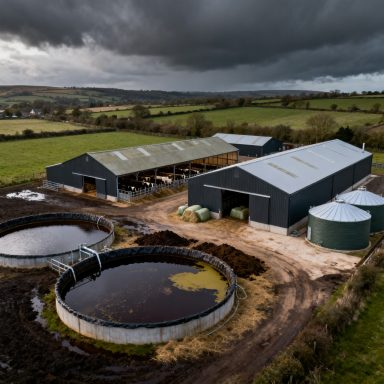
Potential sources may include livestock housing, manure and slurry storage, land spreading, silage, poultry or pig units, equestrian activities and other farm operations where odour emissions can vary according to activity, season and meteorological conditions.
The assessment considers the relationship between the source, pathway and receptor, together with factors such as odour character and intensity, frequency and duration, separation distance, prevailing meteorological conditions, receptor sensitivity and site-specific operational practices.
For planning applications, the purpose is to establish whether agricultural odour is likely to represent a material constraint to development and whether mitigation, design changes or further assessment may be required.
When is an Agricultural Odour Assessment Required?
An agricultural odour assessment may be required where a proposed development could introduce sensitive receptors close to existing farming activities, or where a new or expanded agricultural operation has the potential to affect nearby homes or other sensitive uses.
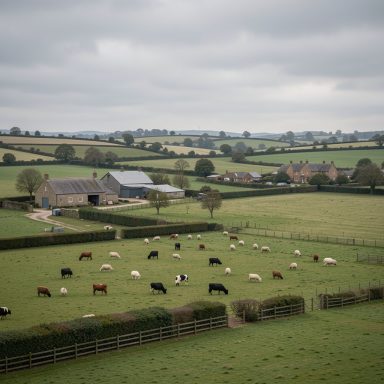
This commonly arises where residential development is proposed near livestock buildings, manure or slurry storage, equestrian premises, poultry or pig units, or other established rural activities.
An assessment may also be requested by a Local Planning Authority or Environmental Health Officer where agricultural odour has been identified as a potential constraint to development.
Early assessment can help determine whether odour is likely to influence the acceptability, layout or design of a proposal before significant design work is undertaken.
Common Agricultural Odour Sources
Agricultural odour can arise from a range of activities and may vary considerably according to operational practices, weather conditions and the time of year.
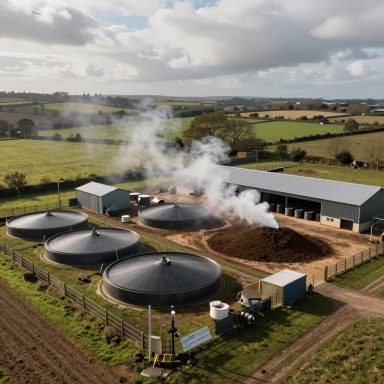
Potential sources can include livestock housing; manure heaps and storage areas; slurry tanks, lagoons and handling systems; poultry and pig units; silage and feed storage; equestrian activities; land spreading; and the movement or handling of organic materials.
The significance of a source cannot normally be determined from distance alone. The type of activity, scale and frequency of operation, odour character, local meteorology and sensitivity of surrounding receptors all need to be considered.
Development Near Existing Agricultural Odour Sources
Residential development close to an established farm or other rural activity can require particular consideration because future occupants may experience odour that forms part of normal agricultural operations.
Our assessments consider the relationship between the proposed development and existing odour sources, including separation distances, site layout, receptor locations, prevailing meteorological conditions and the nature and frequency of agricultural activities.
Where appropriate, the assessment can help identify whether particular parts of a site are more exposed to odour and whether changes to layout, receptor location, landscaping or other design measures could reduce potential effects.
This provides planning teams with an evidence-based understanding of potential constraints before development proposals are finalised.

Our Agricultural Odour Assessment Approach
Each assessment is tailored to the site rather than applying a fixed separation distance or generic screening rule. The assessment considers the agricultural source, the potential pathway by which odour may reach surrounding land, and the sensitivity of the receptors that could be affected.
Relevant information may include the type and scale of agricultural activity; livestock numbers where available; manure, slurry or waste-management practices; source locations; frequency and duration of activities; surrounding land uses; separation distances; local topography; meteorological conditions; and the location and sensitivity of nearby receptors.
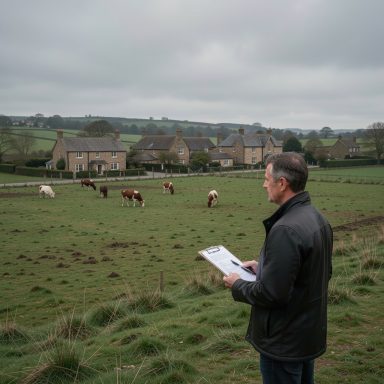
Where site-based observations are undertaken, these are considered alongside the wider evidence rather than being treated as representative of conditions at all times. Survey locations are selected according to the relationship between the source, surrounding land uses and the proposed development. Observations may consider odour character, intensity, frequency and duration together with source activity and weather conditions at the time of the survey.
Agricultural emissions can be highly variable. Activities such as manure handling, slurry management, livestock movements or land spreading may occur intermittently, while seasonal and meteorological conditions can also influence odour dispersion. For this reason, survey observations are interpreted alongside operational information, mapping, meteorological evidence and the wider site context.
Agricultural Odour Mitigation & Development Design
Where potentially significant odour effects are identified, mitigation should be proportionate to the source and the proposed development.
For sensitive development near an existing agricultural source, measures may include increasing separation distances, relocating more sensitive uses, revising site layout, positioning open space in areas of greater potential exposure or modifying the orientation of buildings and external amenity areas.
Where the assessment relates to an agricultural operation itself, mitigation may instead focus on source management, manure or slurry handling, storage arrangements, containment, housekeeping, operational timing or other practical controls.
The appropriate strategy depends on the characteristics of the individual site and should be developed from the findings of the assessment rather than applying generic measures.
Agricultural Odour & Planning Applications
Odour may become a material planning consideration where there is a realistic potential for agricultural activities and sensitive development to conflict.
A planning-focused agricultural odour assessment should therefore provide more than a description of the nearby source. It should establish how odour could reach the proposed receptors, consider the likelihood and potential significance of exposure, and explain the evidence supporting the conclusions reached.
OdourScope prepares clear, proportionate reports designed to assist applicants, planning consultants, Environmental Health Officers and Local Planning Authorities in understanding the potential odour relationship between agricultural operations and proposed development.
Where the available evidence indicates that additional assessment or design changes are appropriate, these are identified clearly within the report.
Request an Agricultural Odour Assessment
If you are proposing development close to an agricultural or rural odour source, or require an assessment of potential odour effects from an agricultural operation, please provide the site location, proposed development details and any available planning or operational information.
OdourScope can review the project requirements and advise on an appropriate scope of assessment.
Related Odour Services
Agricultural projects may require different levels of assessment depending on the nature of the source and proposed development.
OdourScope also provides:
Odour Surveys & Qualitative Odour Assessments
For site-based investigation and assessment of existing odour conditions.
Odour Impact Assessments for Planning
For formal assessment of potential odour effects associated with proposed development.
Odour Consultancy & Feasibility Advice
For early-stage review where the level of potential odour constraint has not yet been established.
Commercial Kitchen Odour Assessments
For restaurants, takeaways and other food premises requiring specialist extraction and odour-control assessment.