
Odour Surveys & Odour Consultancy
OdourScope provides specialist odour surveys, odour impact assessments and qualitative odour risk assessments for planning and environmental compliance across the UK. We assess odour from agricultural and equestrian activities, livestock and manure storage, wastewater and sewage treatment, waste facilities, food production, industrial processes and commercial kitchens.
We also assess new residential and other sensitive developments proposed near existing odour sources, helping applicants understand potential constraints and address odour at an early stage of the planning process.
Specialist Odour Consultancy for Planning & Development
Odour can be a material consideration where a proposed development may generate odour, or where new sensitive receptors are introduced close to an existing odour source. OdourScope provides proportionate, site-specific assessments to identify potential sources, pathways and receptors and determine whether odour is likely to represent a constraint to development.
Our work ranges from desktop feasibility and qualitative risk assessment through to site-based odour surveys and more detailed impact assessment. The appropriate methodology is selected according to the nature of the source, surrounding land uses, available evidence and the requirements of the relevant planning authority or Environmental Health Officer.
Assessments prepared for planning are informed by current professional guidance, including the IAQM Guidance on the Assessment of Odour for Planning (2026 v2.0), together with relevant local policy and sector-specific guidance where applicable.

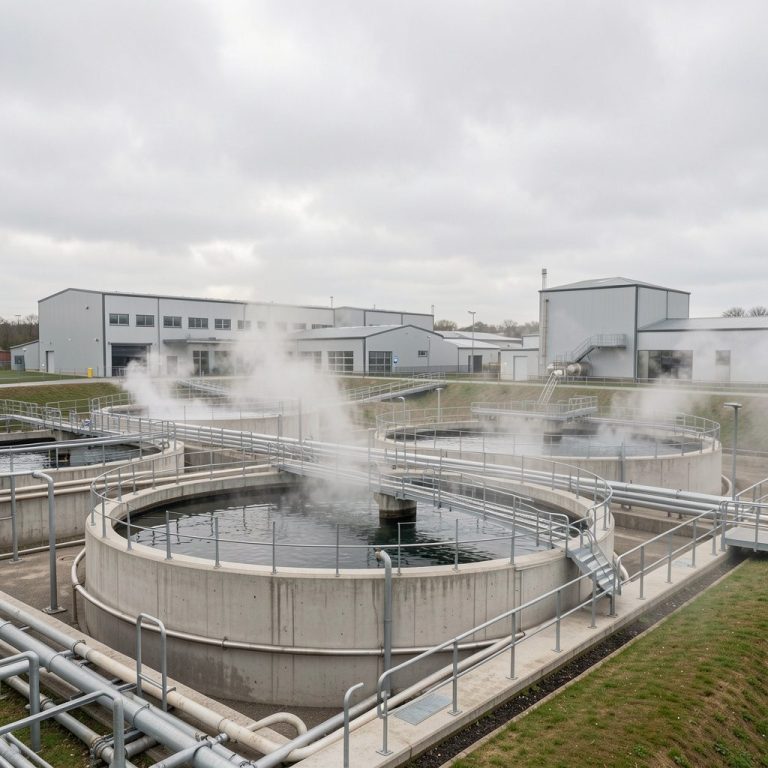
Odour Surveys & Qualitative Assessments
Site-based odour surveys can provide valuable evidence of existing odour conditions and help establish the relationship between an odour source and nearby sensitive receptors. Depending on the project, surveys may include observations at the development site, around potential source locations and at representative receptor positions.
Our qualitative assessments consider factors such as the nature and offensiveness of the odour, its intensity, frequency and duration, source activity, prevailing and observed meteorological conditions, receptor sensitivity and the potential pathway between source and receptor.
Survey findings are considered alongside available site information, operational practices, planning history, mapping and meteorological evidence to provide a balanced assessment of potential odour effects.

Odour Impact Assessments
Odour Impact Assessments are commonly required where odour emissions could affect neighbouring sensitive receptors or where a proposed sensitive development may be exposed to an existing odour source.
The scope of assessment depends on the nature and complexity of the project. This may include a review of existing and proposed activities, identification of sensitive receptors, site-based odour observations, qualitative source–pathway–receptor assessment, consideration of meteorological conditions, planning and complaint history, and evaluation of appropriate mitigation measures.
Where a qualitative assessment is sufficient, professional judgement and multiple lines of evidence can provide a proportionate basis for determining likely odour effects. More complex projects may require additional quantitative assessment or dispersion modelling.

Commercial Kitchen Odour Assessments
Commercial kitchens present a specific type of odour risk requiring consideration of cooking intensity, extraction arrangements, discharge location, nearby receptors and the proposed level of odour control. OdourScope provides dedicated commercial kitchen odour risk assessments and mitigation advice for restaurants, takeaways, cafés and other food premises.
These assessments draw on the relevant commercial-kitchen guidance and consider the suitability of filtration and treatment measures such as particulate filtration, electrostatic precipitation and activated carbon where appropriate.

When Might an Odour Assessment Be Required?
An odour assessment may be requested during a planning application, following comments from an Environmental Health Officer, where a development is proposed close to an existing odour source, or where changes to an existing operation could affect nearby sensitive receptors.
Where odour has been identified as a potential planning concern, applicants may also be required to address specific matters raised by the Local Planning Authority or Environmental Health Officer. Further information on the relevant assessment requirements and how these matters are addressed during the planning process can be found in our guidance on odour compliance for planning applications.
Early assessment can help identify whether odour represents a material planning constraint, establish whether further survey work is necessary and determine whether mitigation or design changes should be incorporated before an application progresses.
Our Odour Consultancy Services

Get A Quote Now!
Based in the North East and supporting projects nationwide, OdourScope provides specialist odour consultancy across Newcastle, Sunderland, Durham, London and throughout the UK.