Why Assessments Fail
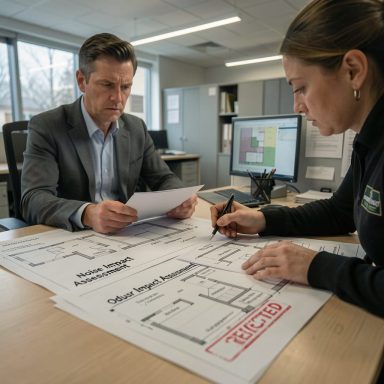
Noise and odour assessments can fail when they are introduced too late in the project lifecycle or are based on incomplete baseline data and unrealistic operating assumptions. Insufficient stakeholder engagement, poor understanding of regulatory requirements, and lack of coordination between design teams often lead to underestimating impacts or proposing ineffective mitigation. When assessments are treated as a box-ticking exercise rather than a strategic tool, the result can be planning delays, enforcement action, reputational damage, and costly redesigns that could have been avoided through early, integrated evaluation.
Why Noise & Odour Assessments Get Rejected by Local Authorities
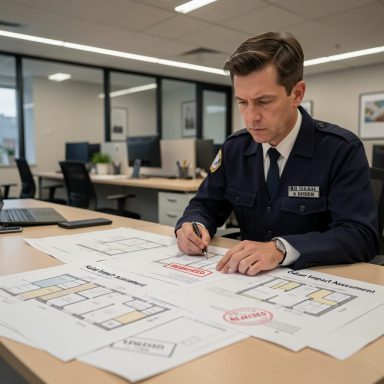
Noise and odour impact assessments are often the final hurdle between a planning application and approval. Yet many are delayed, challenged, or effectively rejected by local authorities due to avoidable weaknesses in reporting, modelling, or mitigation strategy.
Understanding why environmental assessments fail can help developers, architects, and planning consultants avoid costly delays and redesign work.
Below are the most common reasons noise and odour assessments are rejected — and how to prevent it.
1. The Assessment Was Commissioned Too Late
One of the biggest causes of planning delay is timing.
When a noise impact assessment or odour assessment is commissioned after site layout, plant positioning, or ventilation strategy has already been finalised, mitigation options become limited. Local authorities may then object because:
- Plant noise exceeds acceptable limits
- Residential receptors are too close to odour sources
- Mitigation appears unrealistic or retrofitted
2. Weak Baseline Data
Local authorities scrutinise baseline surveys carefully. Common issues include:
- Insufficient monitoring duration
- Survey locations that don’t represent worst-case receptors
- Outdated data
- Weather conditions not properly considered
For odour assessments, weak characterisation of existing sources can undermine dispersion modelling results. For noise reports, limited unattended monitoring or poor sample periods often trigger queries.
3. Unrealistic or Unsupported Modelling Assumptions
Dispersion modelling and acoustic modelling are technical disciplines. When assumptions are unclear or overly optimistic, planning officers may seek further clarification or reject conclusions.
- Typical modelling issues include:
- Incorrect source emission rates
- Inappropriate meteorological data selection
- Oversimplified building screening assumptions
- Failure to model cumulative sources
If predicted impacts sit just below acceptable thresholds, authorities often request sensitivity testing.
4. Mitigation That Looks Theoretical
Local authorities are cautious of mitigation strategies that:
- Rely on operational controls without enforcement clarity
- Assume unrealistic plant enclosures
- Lack technical specification detail
- Are not shown on submitted drawings
Mitigation must be deliverable, measurable, and proportionate.
5. Poorly Structured Reports
Even technically sound assessments can face objections if:
- Conclusions are unclear
- Executive summaries are vague
- Key results are buried in appendices
- Methodology is difficult to follow
Planning officers often review dozens of reports per week. Clarity improves confidence.
6. Failure to Address Sensitive Receptors Properly
Many refusals arise because reports underestimate receptor sensitivity. Common examples include:
- New residential development near commercial kitchens
- Mixed-use schemes above plant rooms
- Schools or care homes near industrial activity
Assessments must reflect realistic use patterns and vulnerability.
7. Cumulative Impact Overlooked
Local authorities increasingly assess cumulative environmental impact.
If nearby industrial, commercial, or traffic noise sources are excluded from consideration, objections may follow. The same applies to multiple odour sources within a site.
Key Takeaways
Noise and odour impact assessments are not just compliance documents — they are risk management tools. When prepared strategically and integrated into the design process, they support planning approval rather than hinder it.
If you’re preparing a planning application and want to minimise environmental objection risk, early specialist input can make a measurable difference. To improve the likelihood of approval:
- Commission assessments early in the design process
- Ensure robust baseline monitoring
- Use transparent modelling assumptions
- Define mitigation clearly and realistically
- Present conclusions clearly and confidently
- Consider cumulative and future site changes
Proactive environmental input reduces planning risk, protects programme timelines, and avoids costly redesign.