
Noise and Odour Assessment: Why a Combined Approach Improves Planning Success
Why Noise and Odour Should Be Considered Together
In planning applications, environmental impacts are often a determining factor in whether a development proceeds smoothly or encounters delay. Two of the most common issues raised by local authorities are noise and odour.
These impacts are typically assessed separately, with different consultants preparing independent reports. While this approach is common, it does not reflect how planning decisions are made in practice. Environmental Health Officers (EHOs) and planning officers assess developments based on their overall effect on nearby receptors, particularly residential properties. Noise and odour are therefore considered together, even when they are reported separately.
A combined approach to noise and odour assessment aligns with this reality. It provides a more robust and efficient strategy, reduces inconsistencies, and improves the likelihood of a successful planning outcome.


What a Noise and Odour Assessment Involves
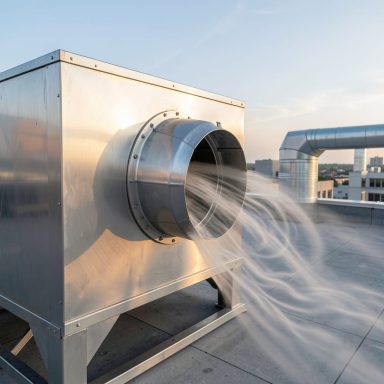
A noise and odour assessment examines how a development may affect its surroundings through both sound and airborne emissions. In many cases, these impacts originate from the same sources, such as kitchen extract systems, mechanical plant, or ventilation equipment.
Noise assessments typically consider plant and operational sound, often with reference to standards such as BS4142. Odour assessments focus on emissions from cooking or industrial processes, using recognised guidance such as IAQM and DEFRA.
Where both impacts arise from the same system, assessing them independently can overlook important interactions. A coordinated assessment ensures that the development is considered as a whole, rather than as a series of disconnected technical issues.
The Limitations of Separate Assessments
When noise and odour are addressed independently, issues often emerge later in the planning process. Mitigation measures designed in isolation can conflict with one another, particularly where airflow, extraction rates and acoustic controls are interdependent.
For example, measures introduced to reduce noise, such as acoustic enclosures or attenuators, may restrict airflow and reduce the effectiveness of odour control systems. Conversely, increasing extraction rates to improve odour dispersion can result in higher noise levels. These conflicts are not always apparent until both reports are reviewed together, which can lead to revisions and delays.
There is also a risk of inconsistency between reports. Differences in receptor locations, operating assumptions or plant specifications can raise concerns for planning officers and EHOs. Even minor discrepancies can lead to requests for clarification, prolonging the decision-making process.
In addition, separate assessments often result in duplicated work. Multiple site visits, overlapping data collection and repeated analysis increase both cost and programme time without adding value to the outcome.



Understanding the Interaction Between Noise and Odour
In real developments, noise and odour are closely linked. A commercial kitchen extract system, for example, will generate both odour emissions and fan noise. Adjustments to improve one aspect will often influence the other.
The same applies to mechanical plant and ventilation systems, particularly in mixed-use developments where sensitive receptors are located nearby. In these situations, it is not sufficient to demonstrate compliance in isolation. What matters is how the development performs as a whole in its surrounding environment.
A joined-up approach allows these interactions to be understood and addressed at an early stage, reducing the likelihood of conflict later in the design or planning process.
The Benefits of a Combined Consultancy Approach
A combined noise and odour consultancy provides a more coherent and efficient process from the outset. Site assessments are undertaken once, with a consistent understanding of the development, its operation and its surrounding context. This ensures that both disciplines are based on the same assumptions and baseline conditions.
Modelling and assessment are then developed in parallel, allowing potential conflicts to be identified early. This leads to mitigation strategies that are designed to work together, rather than being retrofitted to resolve issues after they arise.
The result is a more streamlined planning submission. Reports are consistent, clearly aligned and easier for regulators to review. This reduces the likelihood of queries or objections and supports a smoother path to approval.


The Role of EHOs and Planning Authorities
Environmental Health Officers are responsible for assessing the impact of developments on local amenity. Their focus is not limited to individual technical disciplines, but on the combined effect of all environmental impacts.
This means that even where separate reports are submitted, they are ultimately considered together. Any inconsistencies or gaps in coordination can therefore become a point of concern.
A combined noise and odour assessment addresses this directly by presenting a unified and coherent strategy. It demonstrates that environmental risks have been considered holistically and that mitigation measures are practical and deliverable.
Commercial Benefits for Developers and Operators
A coordinated approach to noise and odour assessment is not only technically advantageous, but also commercially beneficial. By reducing duplication and improving efficiency, consultancy costs can be controlled more effectively. At the same time, the risk of delays is reduced, helping projects progress in line with programme expectations.
Perhaps most importantly, early coordination reduces the likelihood of redesign. Identifying and resolving conflicts at the assessment stage avoids costly changes later in the project, when mitigation measures have already been incorporated into the design.
This level of certainty is particularly valuable in time-sensitive or high-value developments, where planning delays can have significant financial implications.
When a Combined Noise and Odour Assessment Is Required
Many types of development benefit from a combined approach, particularly where plant, extraction or industrial processes are involved. This includes commercial kitchens, food production facilities, mixed-use schemes and developments in close proximity to residential receptors.
In these scenarios, noise and odour are rarely independent issues. Addressing them together provides a more realistic assessment of potential impact and a more effective strategy for mitigation.



A More Effective Approach to Environmental Assessment
Noise and odour are inherently linked in many developments, yet they are often treated as separate challenges. This can introduce unnecessary complexity and risk into the planning process.
A combined assessment approach reflects how developments are actually evaluated by regulators. It provides a clearer, more consistent and more efficient route to managing environmental impact.
Contact OdourScope
At OdourScope, we provide both noise and odour consultancy as part of a single, integrated service. This allows us to develop coordinated strategies that reduce risk, improve efficiency and support successful planning outcomes.
If you are planning a development involving plant, extraction systems or commercial kitchens, we can help you take a more effective approach from the outset.
Contact us to discuss your project.