BS4142 Noise Assessment Guide (2026) – Industrial Noise Impact for Planning
A BS4142 noise assessment is used to determine whether industrial or commercial noise may affect nearby residential properties or other noise-sensitive locations.
Local planning authorities across the UK frequently require BS4142 noise impact assessments when developments introduce new plant, machinery, or operational activities that could generate noise.
This guide explains:
- what a BS4142 assessment is
- when it is required for planning
- how the assessment works
- how results are interpreted
- how noise mitigation is implemented.
What is a BS4142 Noise Assessment?
A BS4142 noise assessment evaluates the impact of industrial and commercial noise sources on surrounding receptors, particularly residential properties.
The standard used is:
BS 4142:2014 + A1:2019 – Methods for rating and assessing industrial and commercial sound.
The assessment compares the noise from the specific industrial source with the existing background noise environment.
This method allows environmental health officers and planning authorities to determine whether a development is likely to cause noise disturbance or complaints.
When is a BS4142 Noise Assessment Required?
A BS4142 noise survey is commonly required during planning applications, environmental permitting, or compliance investigations.
Typical situations include:
1. New Mechanical Plant Installations
Plant equipment such as:
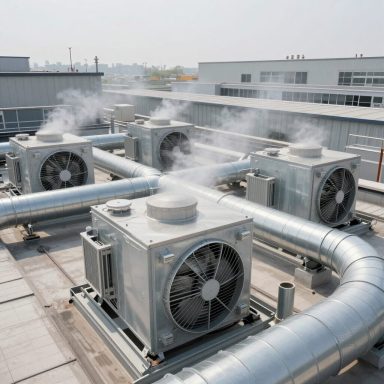
- air conditioning units
- heat pumps
- chillers
- generators
- ventilation systems.
Planning authorities frequently require BS4142 assessments before installation.
2. Commercial and Industrial Developments
New developments such as:
- factories
- warehouses
- logistics hubs
- energy facilities
- recycling centres.
These sites often generate operational noise that must be assessed.
3. Residential Developments Near Industry
Where housing is proposed close to an existing industrial or commercial site, a BS4142 assessment may be required to demonstrate that future residents will not experience unacceptable noise impacts.
4. Noise Complaints Investigations
Environmental health officers may use BS4142 methodology to determine whether existing industrial noise sources are causing statutory nuisance.
How a BS4142 Noise Impact Assessment Works
The BS4142 methodology compares the rating level of the industrial noise source with the background sound level at the nearest noise-sensitive receptor.
The assessment typically includes the following stages.
1. Site Review and Assessment Context
An acoustic consultant first establishes the context of the noise environment.
Important considerations include:
- surrounding land use
- distance to residential receptors
- operating hours of the noise source
- acoustic characteristics of the environment.
Context is an important part of BS4142 because the same noise level may have different impacts depending on the local sound environment.
2. Background Noise Survey
A background noise survey measures the existing environmental sound levels when the industrial source is absent.
The key metric used is LA90,T — the background sound level exceeded for 90% of the measurement period. Measurements are typically conducted using Class 1 sound level meters positioned near the most exposed receptor locations.
Surveys may include:
- daytime measurements
- evening measurements
- night-time measurements.
3. Measuring or Predicting Specific Noise
The specific noise level from the industrial or commercial source is then determined.
This may involve:
- direct measurement of existing plant
- manufacturer sound power data
- acoustic modelling for proposed developments.
Predictive noise modelling is often required where plant has not yet been installed.
4. Character Corrections
BS4142 recognises that certain sound characteristics can make noise more noticeable.
Therefore penalties (character corrections) may be applied where noise contains:
- tonal characteristics (hum or whine)
- impulsive sounds
- intermittent operation.
These corrections are added to the measured specific noise level to produce the rating level.
The rating level is compared with the background sound level to determine the potential impact. The difference between these values indicates the likely significance.
Typical Interpretation is as follows;
Difference (Rating Level – Background) Likely Impact
- +10 dB or more Significant adverse impact likely
- Around +5 dB Adverse impact depending on context
- 0 dB or below Low impact and complaints unlikely
The final conclusion considers both the numerical result and the wider acoustic context.
Why BS4142 Noise Assessments Are Important
BS4142 assessments help ensure that industrial and commercial developments do not create unacceptable noise impacts on surrounding communities.
Benefits include:
- supporting planning applications
- preventing future noise complaints
- demonstrating environmental compliance
- protecting residential amenity.
Because the standard is widely recognised by planning authorities and environmental health officers, a professionally prepared BS4142 assessment can significantly improve the chances of planning approval.
BS4142 Noise Assessment for Planning Applications
Planning authorities frequently request BS4142 assessments when developments involve:
- rooftop plant equipment
- commercial refrigeration systems
- industrial operations
- distribution centre activity
- energy infrastructure.
An acoustic report prepared in accordance with BS4142 can demonstrate that the proposed development will operate without causing significant adverse noise impacts.
Securing Planning Approval with Confidence
A professionally prepared BS4142 noise impact assessment compares predicted operational noise with existing background sound levels and clearly demonstrates compliance with planning policy and environmental health requirements. By identifying potential impacts early and recommending appropriate mitigation measures where necessary, a robust BS4142 assessment helps developers secure planning approval with confidence while protecting local amenity.